
18/30 How Grooming Teaches You to Distrust Your Own Reactions and Memories
You start editing yourself in real time.
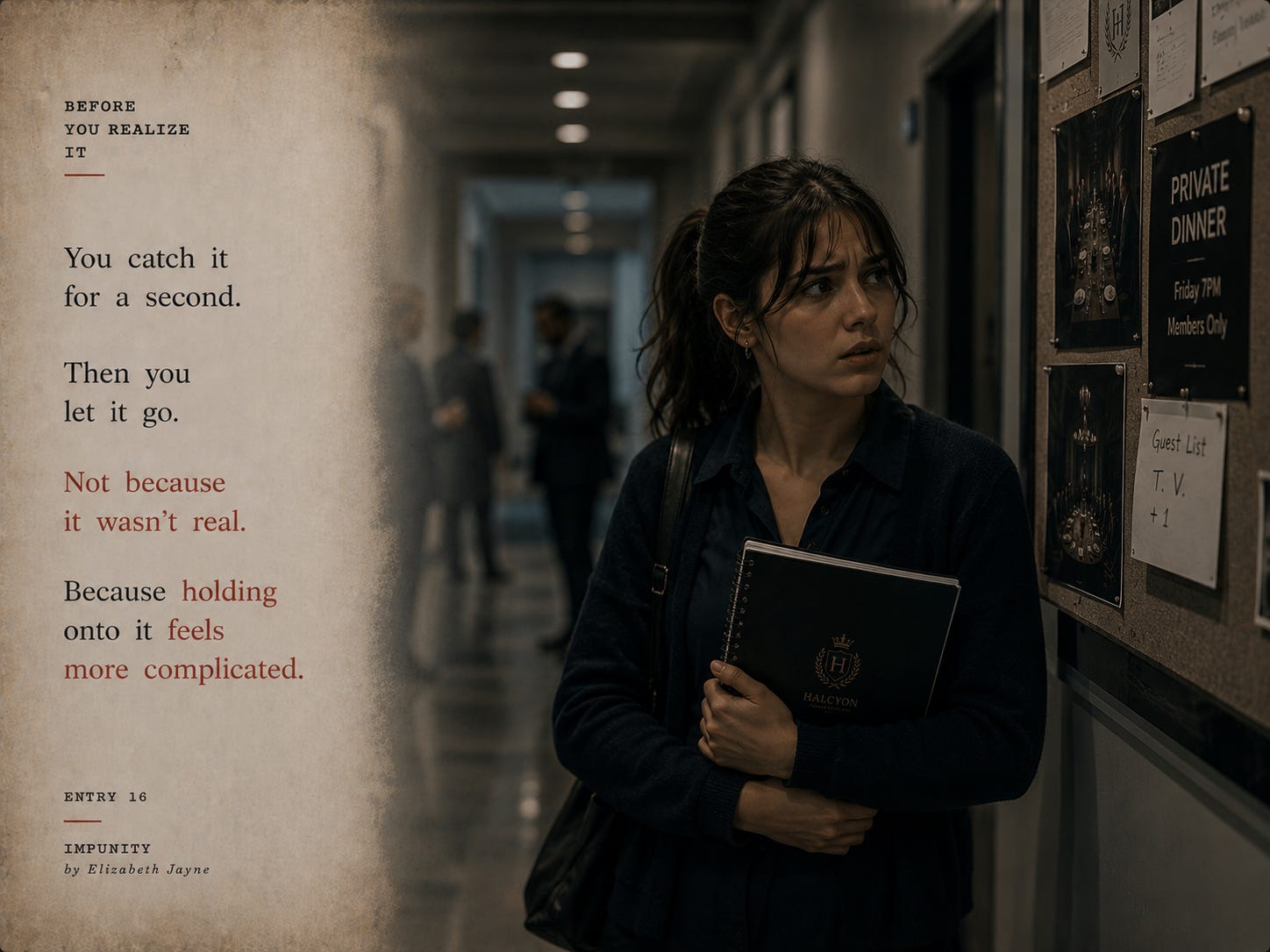
One reason grooming is hard to explain later is that a lot of the important moments disappear almost immediately.
Not because they weren’t real.
Because you move past them too fast.
A comment lands wrong for half a second. Someone touches you in a way that feels slightly too familiar. A conversation shifts and your body reacts before your thoughts fully catch up.
And then the moment keeps moving.
Everyone else acts normal.
Nobody stops.
Nobody names it.
So you let it go too.
That part matters more than people realize.
Because grooming often depends on reactions that never fully settle into memory. The discomfort appears, but the environment teaches you to smooth over it before you can really examine it.
You tell yourself:
maybe I misunderstood.
maybe it wasn’t that serious.
maybe I’m making something out of nothing.
Does this resonate? Leave a comment.
I read every one. Even the short ones. Especially the short ones.
Then something else happens later.
And later again.
Not dramatic enough on their own.
Just enough to leave residue.
That’s how people end up doubting themselves while still feeling uneasy all the time.
The moments don’t disappear completely. Your body usually keeps them somewhere. But your mind stops treating them as important enough to revisit.
Especially when revisiting them would create conflict.
Or embarrassment.
Or consequences.
So the pattern continues uninterrupted.
Not because nothing felt wrong.
Because every individual moment got released before it could fully become evidence.
And after a while, that release becomes automatic.
You notice something.
You minimize it.
You move on.
Fast enough that even you start wondering whether it happened the way you remember it.
That’s part of how grooming survives inside otherwise normal-looking interactions.
Not through one undeniable moment.
Through dozens of moments people almost held onto.